
Clutter rarely arrives all at once.
It comes in quietly. The post placed on the kitchen counter. The bag dropped by the door. The clothes that aren't quite ready for the wardrobe but aren't going anywhere else either. The delivery box waiting to be dealt with. The cupboard where one thing is pushed in because you'll sort it out later.
None of these moments seems particularly significant. But repeated over days and weeks, they change how a home feels and functions.
This is where small resets can make a considerable difference.
A reset isn't a major decluttering session. It is a short intervention that brings an area back to the way it is supposed to work. Five minutes may be enough. Sometimes ten. The important part is dealing with the accumulation before it becomes a project.
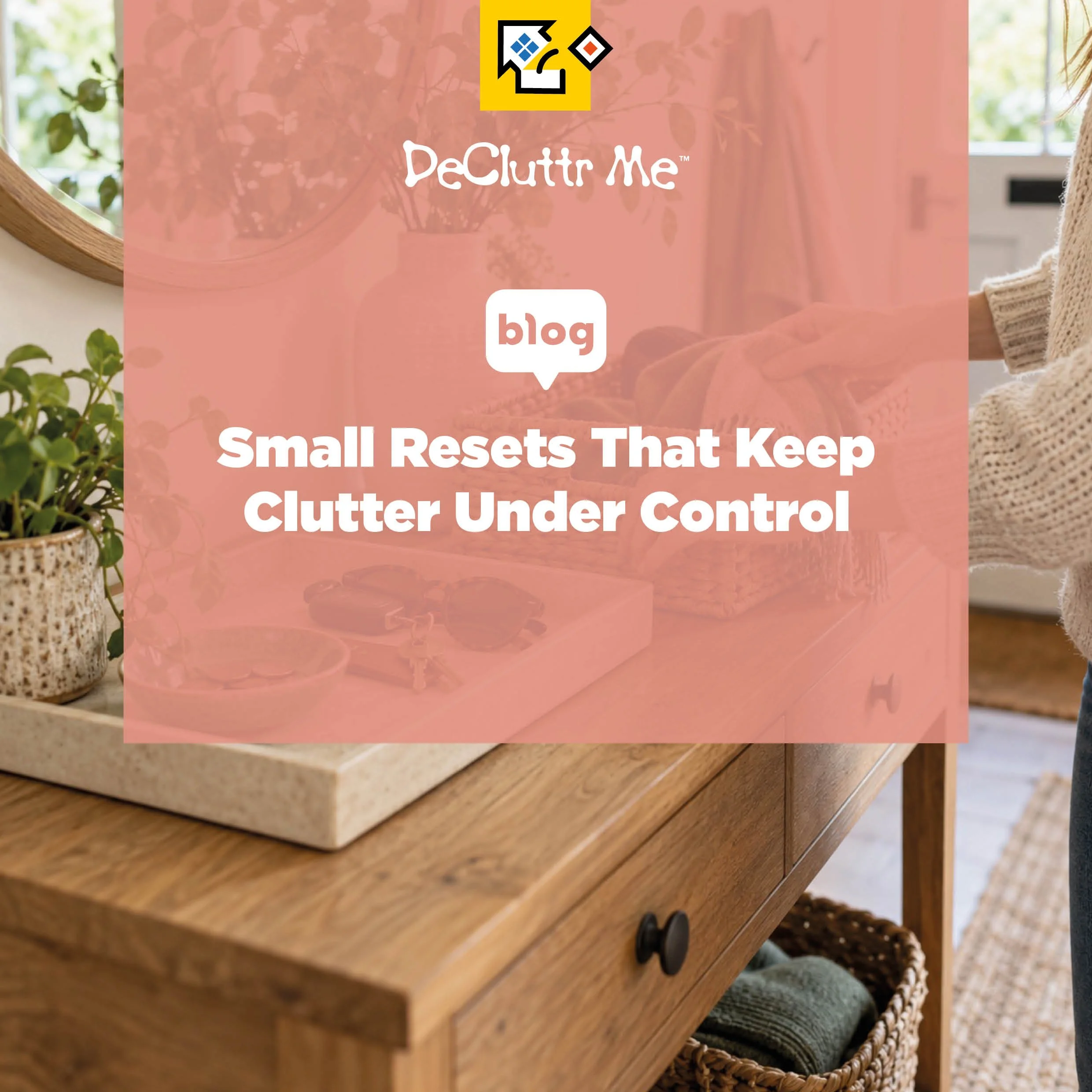
Reset the entrance when coming home starts to feel untidy. Put shoes where they belong, return bags to their usual place and deal with anything that has been dropped there temporarily. Entrances are particularly vulnerable to becoming holding areas because almost everything passes through them.
Reset a surface before it disappears completely. Kitchen counters, dining tables, desks and sideboards attract belongings that don't have an immediate destination. Rather than simply moving the pile elsewhere, take a few minutes to return each item to its proper place.
Reset the wardrobe when putting clothes away becomes difficult. You don't need to review every item you own. Look at the section causing the problem. Perhaps hangers are becoming crowded, a drawer no longer closes easily or shoes are beginning to spread beyond their allocated space. Deal with that specific pressure point.
Reset the household drop zones. Most homes have them, whether deliberately created or not. A basket, chair, corner, drawer or section of worktop gradually becomes the place for things that need attention. Go through it regularly enough that temporary doesn't become permanent.
There is another reset that is particularly useful: the ten-minute return.
Choose one room and spend ten minutes returning anything that belongs elsewhere. Don't start reorganising cupboards or opening boxes. Don't turn it into a bigger job. Simply restore the room to its normal working state.
These small interventions also tell you when the problem is more than everyday accumulation.
If the same surface fills up again almost immediately, ask why. If nobody ever puts something back, perhaps its designated home is inconvenient. If a cupboard is constantly overflowing, there may simply be too much stored inside it.
In those cases, repeatedly resetting the space won't solve the underlying problem. The organising system itself needs attention.
Small resets work best when the basic structure of the home is already sound. Everything has somewhere sensible to go, storage reflects how the household actually functions and the volume of belongings is manageable.
Then keeping clutter under control becomes less about finding time for another enormous declutter and more about noticing when a space needs ten minutes of attention.
Tonight, choose one small area that has started to drift. Set a timer for ten minutes, deal only with that space, and stop when the timer does.
Tomorrow, use it as normal.