
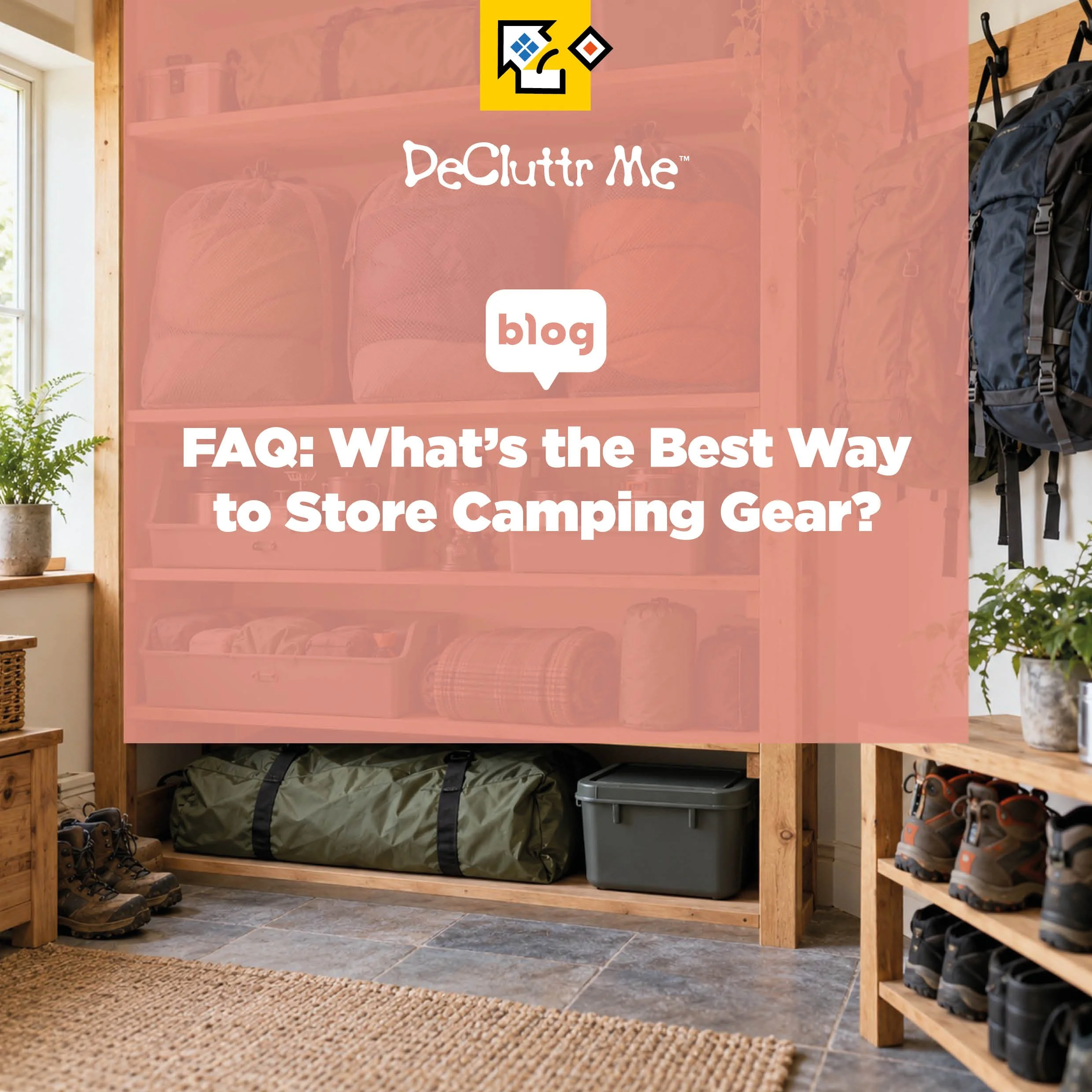
Camping gear has an awkward habit of taking up a lot of space for something you may only use a handful of times each year.
Tents, sleeping bags, chairs, cooking equipment, lanterns, cool boxes, backpacks and all the smaller accessories need somewhere to live between trips. Put everything away without a system and the next camping weekend can begin with several hours spent trying to work out where everything is.
So, what is the best way to store camping gear?
There isn't one perfect container or clever storage product. The best system is one that protects your equipment, keeps related items together and makes getting ready for the next trip straightforward.
Is everything ready to be stored?
This should always be the first question.
Before packing equipment away for any length of time, check that it is completely dry and suitable for storage. Pay particular attention to tents and other fabric items, and always follow the care and storage instructions provided by the manufacturer.
This is also the time to identify anything that needs repairing or replacing. Finding a damaged tent pole when you're unpacking after a trip is useful. Finding it when you're about to leave for the next one isn't.
Should all camping gear be stored together?
Together, yes. In one enormous container, probably not.
Think about how you use your equipment and create a few broad categories. Sleeping equipment can form one group, cooking and food-related equipment another, with lighting, furniture and smaller accessories organised separately.
Keeping categories together makes it easier to see what you already own and what you need to pack.
It also helps prevent the familiar pre-trip purchase of something you later discover you already had.
What about all the little things?
These are usually what cause the most frustration.
Torches, batteries, pegs, ropes, small tools and other accessories can disappear remarkably easily amongst larger equipment.
Give smaller items a defined home within your camping storage. A clearly labelled container or organiser can be enough. Avoid creating too many tiny categories, though. You want to find things quickly, not consult a filing system every time you go away.
Where should camping equipment live?
That depends on your home, the equipment itself and the manufacturer's storage guidance.
A garage, store room, cupboard or other dedicated area may work well, provided it is appropriate for the items being kept there. Equipment that requires particular storage conditions should always be treated accordingly.
What matters organisationally is that camping gear has a recognised home rather than being distributed wherever there happens to be spare space.
What should be easiest to reach?
This depends on how often you camp.
If camping is a regular activity, your equipment deserves relatively accessible storage. If you only use it occasionally, it can occupy less prominent space.
Heavy or bulky equipment should be positioned safely and sensibly, while the items you regularly need first should not be buried behind everything else.
Should I keep a camping inventory?
You don't need a complicated spreadsheet.
A simple list of your main equipment can, however, be extremely useful. Keep it with your camping gear or somewhere easily accessible and use it when preparing for a trip.
Add a short note after each outing if something needs replacing, repairing or adding.
That way, packing for your next trip starts with checking what you have, rather than opening boxes and hoping everything is there.