
Feeling Buried? How to Declutter When You’re Completely Overwhelmed
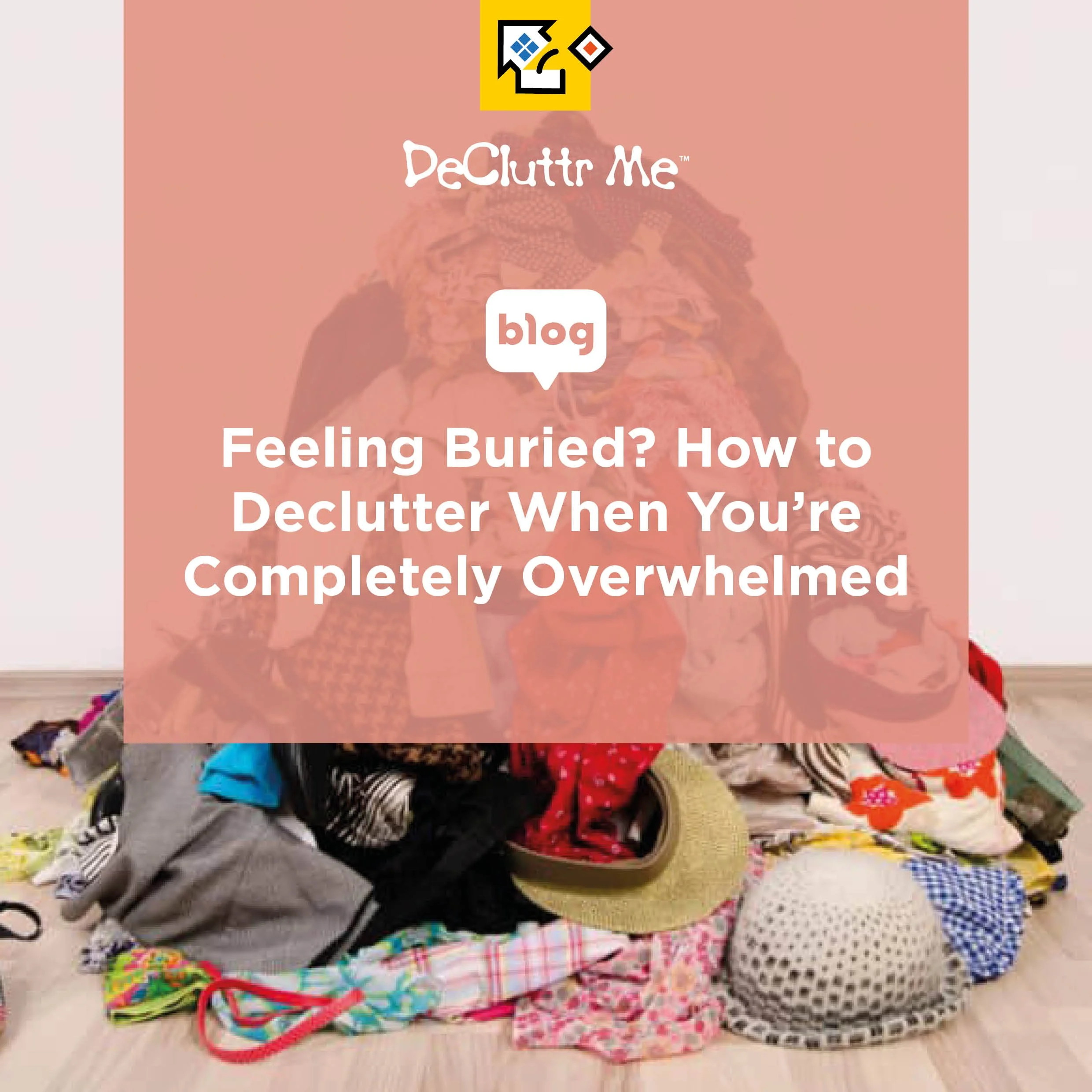
When life feels chaotic, clutter has a way of magnifying that heaviness. You look around and see piles, cupboards that won’t close, surfaces that have disappeared beneath things you “meant to sort”, and the thought of tackling it all becomes so daunting that you freeze. If this is where you are right now, you’re not alone and you’re not doing anything wrong. Overwhelm is often a sign that you’ve simply been carrying too much, for too long.
Decluttering when you already feel buried can seem impossible, but with the right approach, it becomes manageable and even soothing. The goal isn’t to finish the whole house; it’s to create enough breathing room to feel more in control.
Start with the smallest possible space
When everything feels like “too much”, your first win needs to be tiny. Pick a space so small it almost feels silly: one corner of a counter, a single bathroom shelf, a bedside drawer. These small spaces have power. They act as proof that change is possible and help break the cycle of overwhelm.
Once you’ve chosen your spot, give yourself ten minutes. Set a timer if it helps. You’re not committing to a full afternoon, just one short moment of focus.
Simplify your decisions
Decision fatigue is one of the biggest contributors to overwhelm, so remove as many choices as you can. Try the following three-step approach:
Rubbish out first – packaging, receipts, broken items, empty containers.
Remove what obviously doesn’t belong – cups, laundry, bags, toys.
Keep only what you use and love – everything else is a “maybe later” item.
This keeps you moving instead of agonising over where things should go.
Create a “Later Box” to avoid getting stuck
One common trap when you’re overwhelmed is spending too long on one decision. A “Later Box” solves this. Anything you can’t decide on immediately, papers you need to look at, items that might belong somewhere else, things you need to think about, goes inside the box.
Set a future date to revisit it when you’re in a calmer headspace. This protects your progress and prevents spiralling into overthinking.
Make your space work with you, not against you
Once you've cleared a small area, take a moment to reset it in a way that feels supportive. Wipe the surface, return essentials neatly, and resist the urge to overfill the space again. This little pocket of order becomes a visual anchor, a reminder that calm is possible even when everything else feels busy.
Seeing one area tidy often encourages you to continue, but even if you stop there, you’ve achieved something meaningful.
Be gentle with yourself
Clutter often builds during seasons of stress, illness, grief, parenting, caring for others, or simply being stretched thin. It’s not a failure — it’s a sign you’ve been doing your best under difficult circumstances.
Take breaks. Drink water. Put on music or a podcast. Work slowly if you need to. Decluttering isn’t a race; it’s a form of self-kindness.
The shift happens one win at a time
You don’t need a major overhaul to feel better. What you need is momentum created by small, consistent steps. Each corner cleared, each drawer reclaimed, each bag let go of contributes to a home that feels lighter and a mind that feels clearer.
You’re not buried beyond help. You’re simply standing at the beginning of a path and the first step is enough to get you moving.