
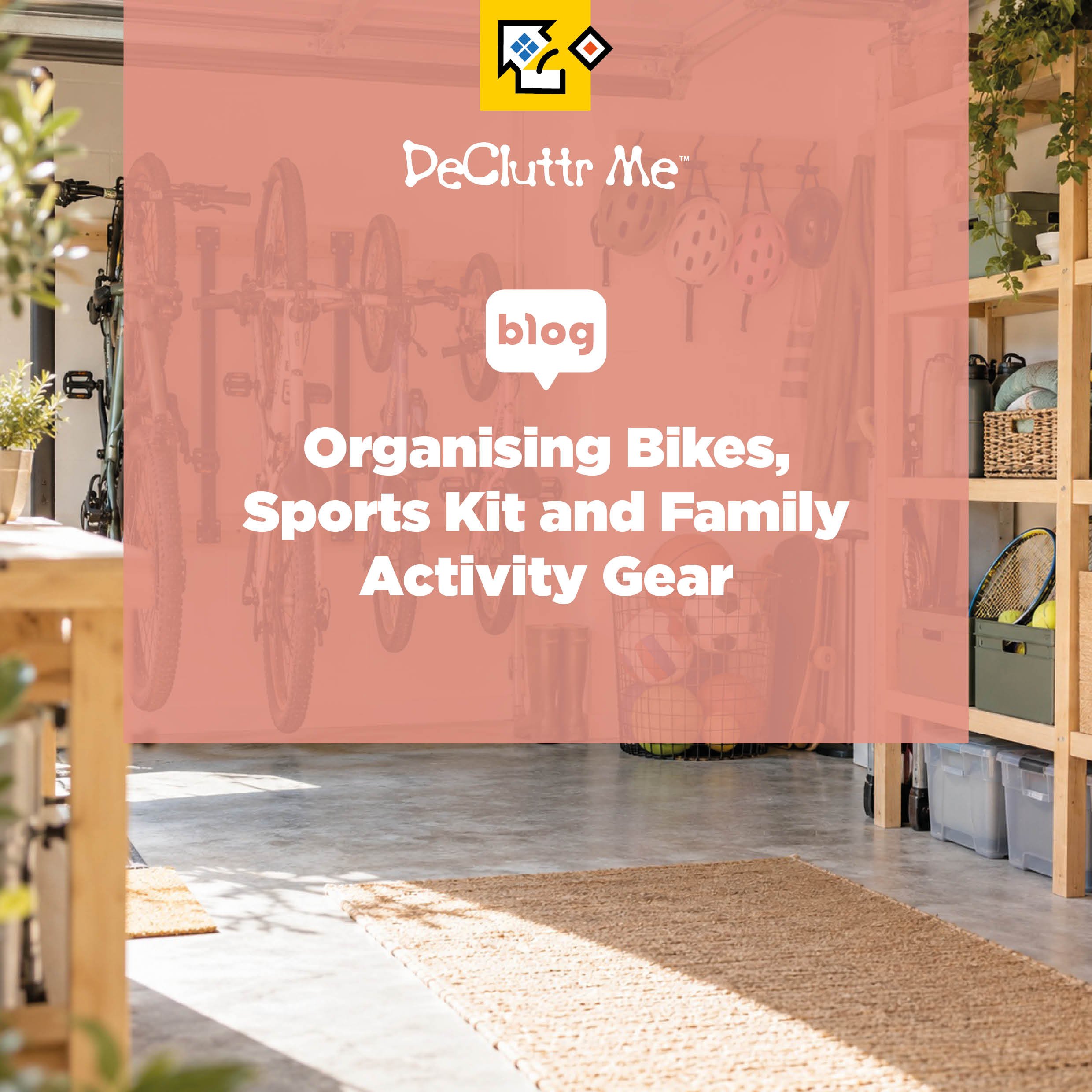
Saturday morning. Someone needs a bike helmet. Someone else can't find their football boots. The water bottle that belongs in the sports bag is in a kitchen cupboard, the bike pump has disappeared and the tennis rackets are exactly where nobody thought to look.
Getting everyone out of the house can take almost as much effort as the activity itself.
Family activity gear is particularly difficult to organise because it comes in so many shapes and sizes. Bikes sit alongside helmets, balls, rackets, protective equipment, backpacks, shoes and all the smaller things needed to make each activity happen.
The solution is to stop thinking about where individual items will fit and start thinking about how the family uses them.
Organise by activity
If one child plays football, keep the boots, kit, ball and relevant accessories together. Cycling helmets should live close to the bikes rather than in a wardrobe at the other end of the house. Tennis or padel equipment can form another group.
This creates a simple connection: we're going cycling, so we go to the cycling area.
For activities shared by the whole family, one designated zone may make more sense than separate storage for each person.
The aim is not to create a perfect display. It is to reduce the number of places you need to visit before leaving the house.
Give awkward equipment priority
Bikes, scooters, golf clubs, rackets and large sports bags aren't easy to tuck neatly onto a shelf. Plan around these first.
Depending on your available space, wall-mounted racks, hooks or dedicated floor areas may help keep larger equipment contained and accessible. Always choose solutions appropriate for the weight and type of equipment, and install them securely.
Then use the remaining storage for smaller items rather than trying to squeeze the largest belongings into a system designed around everything else.
Create a landing spot for returning gear
This is the part that can make the biggest difference.
Activity equipment doesn't always come home ready to be put away. There may be damp clothing, muddy footwear, empty bottles or equipment that needs attention.
Give returning gear somewhere temporary to go while it is being dealt with.
The important word is temporary.
A designated basket, tray or area can prevent everything spreading through the house, but it needs to be cleared regularly. Once items are ready, return them to their proper activity zone.
Keep growing children in mind
Children's equipment has a limited lifespan.
Shoes become too small. Helmets need replacing. Interests change. One sport disappears from the weekly routine and another takes its place.
Every few months, take a quick look at what is being stored. Remove outgrown clothing and equipment, deal with anything damaged and question anything connected to an activity nobody does anymore.
This also makes hand-me-downs easier to manage. If something is being kept for a younger child, store it separately and clearly identify the size rather than mixing it with current equipment.
The “ready to leave” check
Choose one regular family activity and mentally walk through leaving the house for it.
Can you find the main equipment immediately? Are the smaller accessories nearby? Does everyone know where things are returned afterwards?
If getting ready still involves searching several rooms, adjust the system around the activity rather than expecting everyone to remember where ten separate items live.
A few minutes spent doing that now could make Saturday morning considerably less complicated.