
How to Declutter Tools and DIY Supplies
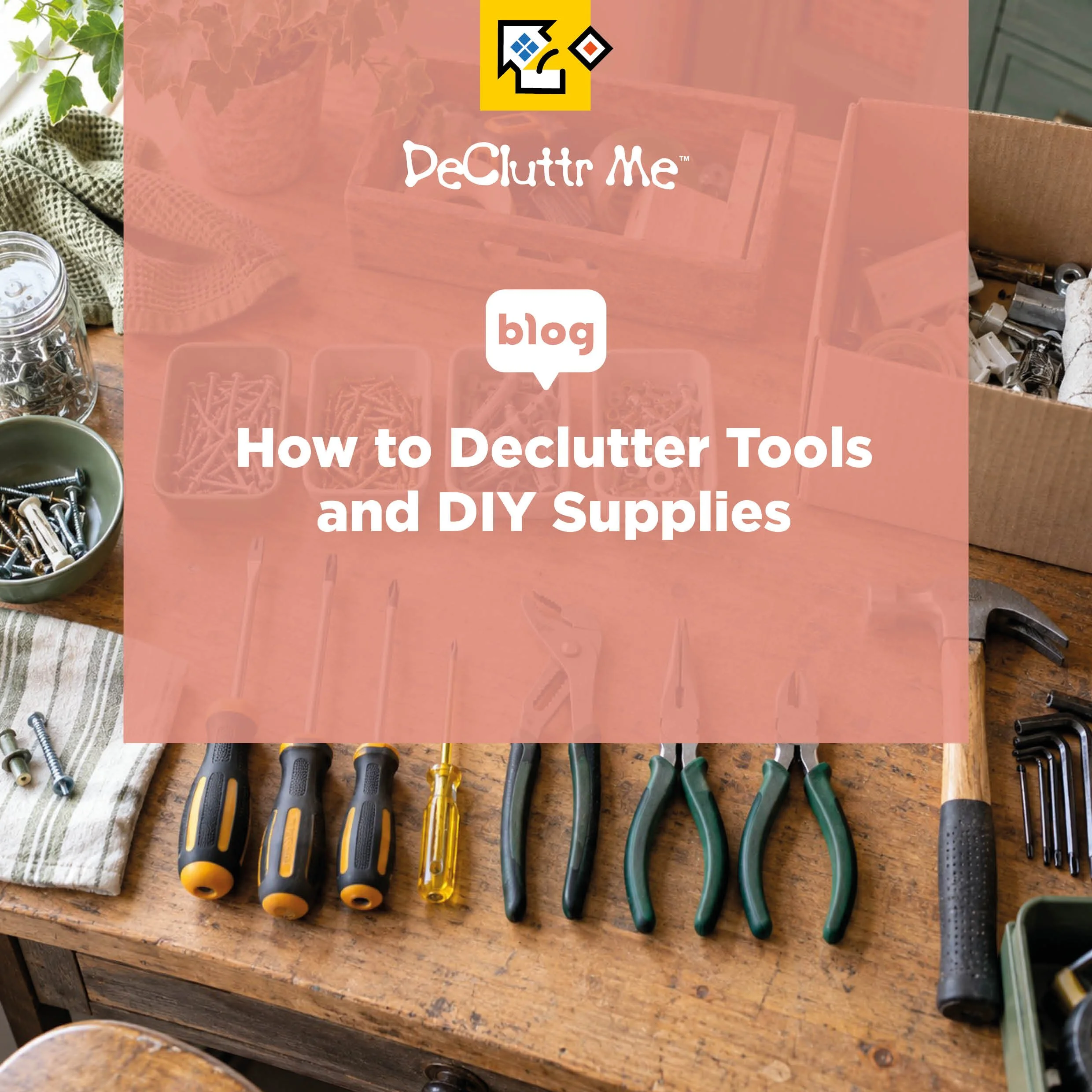
Tools are surprisingly easy to accumulate.
You buy a screwdriver because you can't find the one you already own. A piece of furniture arrives with another Allen key. Half-used packets of screws remain after a project. Paintbrushes, tape measures, drill bits, hooks, nails and mysterious little fittings gradually spread across drawers, cupboards, toolboxes and garage shelves.
Eventually, you have plenty of tools but can never find the right one when you actually need it.
If your DIY supplies have reached that point, forget organising them for a moment. First, work out what you actually have.
Start by Bringing Like with Like
You don't necessarily need to empty an entire garage or store room. Instead, work by category.
Gather your hand tools first. Then power tools and their accessories. Move on to screws, nails, hooks and fixings, followed by decorating supplies and miscellaneous DIY items.
Seeing each category together quickly reveals where the excess is.
Do you need six tape measures? Are three of your screwdrivers almost identical? Why are there 14 Allen keys?
Duplicates aren't automatically unnecessary, particularly if you regularly tackle DIY projects, but they should earn their place.
The DIY Declutter: Keep, Remove or Decide
For every item, make one of three decisions.
Keep it: You use it, it works and you know what it is for.
Remove it: It is broken, dried out, unusable, duplicated unnecessarily or belongs to something you no longer own.
Decide: You aren't quite sure what it is, whether you need it or what it belongs to.
Be careful with the third category. A “decide later” box can very quickly become permanent storage. Give yourself a deadline to identify those mystery parts.
Don't Forget the Small Stuff
Large tools are rarely the biggest organisational problem. It's usually the small DIY supplies.
Screws, nails, wall plugs, drill bits, picture hooks, washers and other fittings become frustrating when they're mixed together.
Separate them into sensible categories and use appropriately sized containers or compartment boxes. You don't need dozens of tiny categories. The aim is to make finding something easier, not to create an inventory system requiring its own instruction manual.
And label anything that isn't immediately obvious.
Keep Tools Where They Make Sense
Once you've reduced what you own, decide where everything should live.
Frequently used household tools might belong in a small, accessible toolbox. Larger equipment can live in the garage, shed or store room. Power tools should have their accessories nearby, rather than the drill being in one place and its bits somewhere completely different.
Where possible, keep related items together.
Think in terms of a task. If you're hanging a picture, could you easily find the tape measure, level, drill, appropriate fixings and basic tools you need?
That's a much better test of your system than whether the shelf looks impressive.
Be Sensible About What You Store
DIY areas can contain sharp objects, electrical equipment and products that need appropriate storage, so accessibility shouldn't come at the expense of safety. Follow manufacturer storage instructions and keep potentially hazardous items securely away from children and pets.
Also resist the temptation to keep every leftover material indefinitely. A useful spare is one thing. A shelf full of remnants from projects completed years ago is another.
Your 20-Minute Job
Set a timer and find every screwdriver you own.
Put them together, remove anything damaged or unnecessary, choose where they will live and return them there.
Next time you need a screwdriver, you'll know exactly where to reach.